

Download our Lesson Plan Catalog
What Do I Get With My Membership?
The Virtual Art Academy is a highly flexible and structured online art school that offers you access to ALL FOUR programs below with just one monthly membership fee. Choose the program that matches your current level of experience. Workshops unlock at the rate of one new workshop per month with your monthly membership dues. Switch to another program whenever you want at no extra cost.
Your membership also comes with:
- a free monthly eBook in our 48 part Art Reference eLibrary series. This is an invaluable reference resource in standard pdf form that you can print out at your convenience. It containss everything you ever wanted to know about how to paint at a master level. You can keep forever after your membership is finished as your goto reference source of information on painting.
- a fun monthly Community Project that you can work on with your fellow students
PROGRAM 1: THE FOUNDATION PROGRAM
Who is this for? If you are an absolute beginner and have never painted or drawn before.
What do you get? A brief introductory workshop covering basic drawing and painting skills (oil, acrylic, watercolor). This prepares you for our Apprentice Program.
How long does it take? The program takes one month.
PROGRAM 2: THE APPRENTICE PROGRAM
Who is this for? If you want to fill in all the gaps in your knowledge that are holding you back. For both beginners and artists with some experience.
What do you get? A program of four workshops (A to D) that cover the essential fundamentals of learning how to paint.
How long does it take? If you do one lesson per week, it will take you approximately twelve months to complete the four Workshops A to D (48 lessons). If you have time to do three lessons per week, you can fast track the program in just four months.
PROGRAM 3: THE GRADUATE PROGRAM
Who is this for? If you are an experienced artist who wants to learn all the major principles of painting and see your work rapidly improve.
What do you get? A program of twelve workshops (E to P) that follow on logically from the four Apprentice Program workshops.
How long does it take? If you do one lesson per week, it will take you approximately thirty six months to complete the twelve Workshops E to P (144 lesssons). If you have time to do three lessons per week, you can fast track the program in just twelve months.
PROGRAM 4: THE POSTGRADUATE PROGRAM
Who is this for? If you would like to become professional and sell your work.
What do you get? A program for advanced students, designed to strengthen all the skills you learned in the Apprentice and Graduate Programs and take you all the way to top professional level. Each month you get these additional classes:
- a Master Class from Barry in the form of a pre-recorded lecture
- a series of Master Profiles from our Learn From The Masters℠ Program
- a Master Demonstration to show you new techniques
- a Portrait Drawing lesson using best practices from the structured Russian Academy portrait method.
How long does it take? The Postgraduate Program is an eight to twelve month program depending on whether you just take just the master classes or also do the portrait lessons.
Question: Do I Have To Commit To The Full Program?
No. You do not have to commit to the full program in advance. You only commit to one month at a time. If, after one month, none of the four programs work for you, you can cancel your membership, and owe nothing more. Your free monthly eBook is yours to download, and keep forever. However with four flexible programs for all level of painters, the vast majority of students find a program that results in real tangible improvements to their painting.
Do I Have To Use Oils ?
If you are sensitive to paint solvents, it is perfectly acceptable to complete the program using either water soluble oil paints, or acrylics. In fact, since the painting course focuses mostly on the underlying principles of painting, many of our students find it perfectly fine to use other media such as gouache, watercolor, pastels, digital painting tools, and even photography.
Can I Move Faster Than One Workshop Per Month?
The workshops for each program unlock at the rate of one per month timed with your monthly membership fees. This cannot be changed because of technical reasons. However the typical time needed to finish all the assignments in a workshop is three months, so it is highly unlikely you could finish a workshop in less than one month. In addition, if you are an experienced painter, you can also do the Apprentice Program workshops and Graduate Program workshops simultaneously, giving you two workshops per month.
The 9 Building BlocksTM You Need To Master
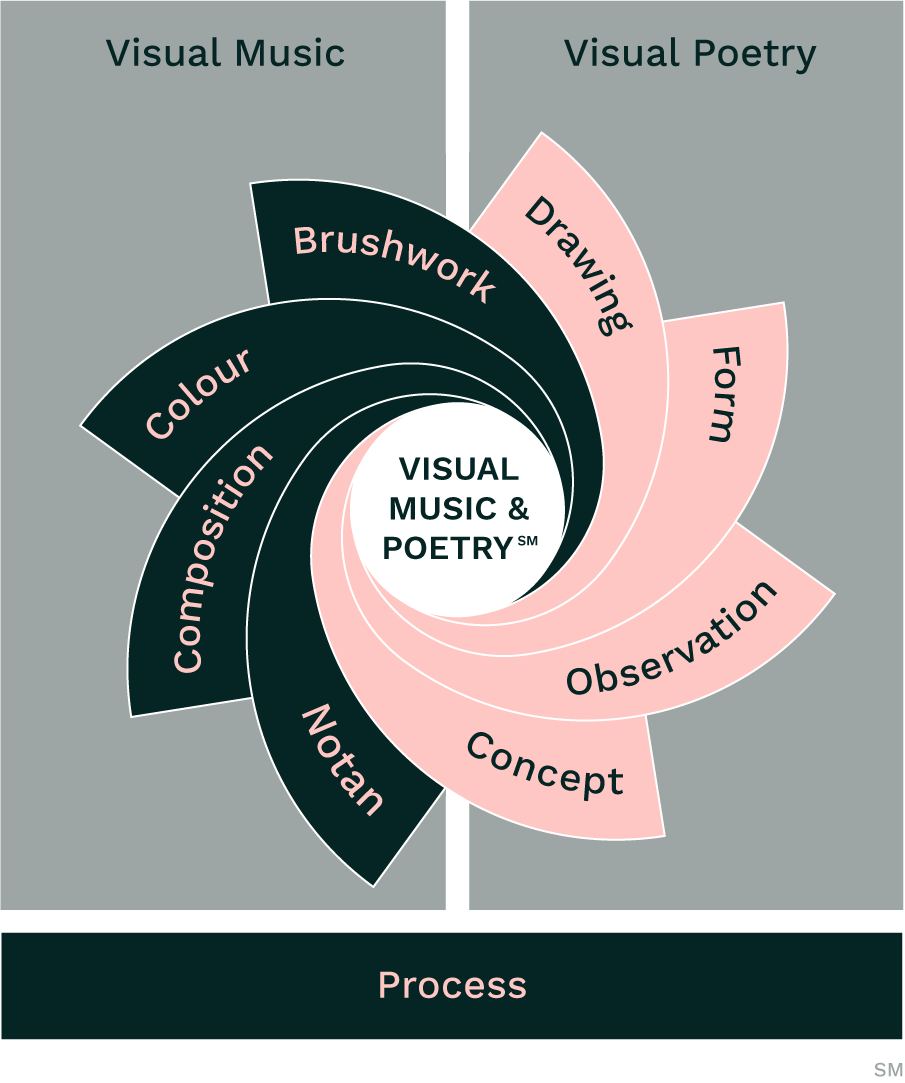
The concept behind the Virtual Art Academy® Online Painting Classes, is that you need to master a certain set of critical skills in order to become a good painter. It is a bit like a Lego approach, in which you build your skills systematically one-by-one.
At the Virtual Art Academy, these skills are divided into nine key groups. We call these Building BlocksTM. The nine skill Building Blocks are:
- Drawing
- Form
- Color
- Composition
- Brushwork
- Notan
- Observation
- Concept
- Process.
Our full curriculum is divided into 16 Workshops, (Workshops A to P).
Each workshop contains 12 lessons, plus a Summary Painting Project to share what you learned in the workshop.
When you have completed all 16 workshops, you will have mastered the content of all 9 Building Blocks.
This is the equivalent amount of content that you would get by taking a four-year program at a prestigious top Art University.
In fact, the Virtual Art Academy oil painting curriculum is a much broader curriculum than you would get at a traditional art school or atelier. You will learn not only the skills of the traditional classical realism, that were taught in the classical academies, but also the principles of impressionism, as well as the principles of modern art and abstract design. No other course covers such a broad range of artistic styles.
The most comprehensive, in depth and well-organized painting course available online

Read more “The most comprehensive, in depth and well-organized painting course available online”
Building Block #1 - Composition
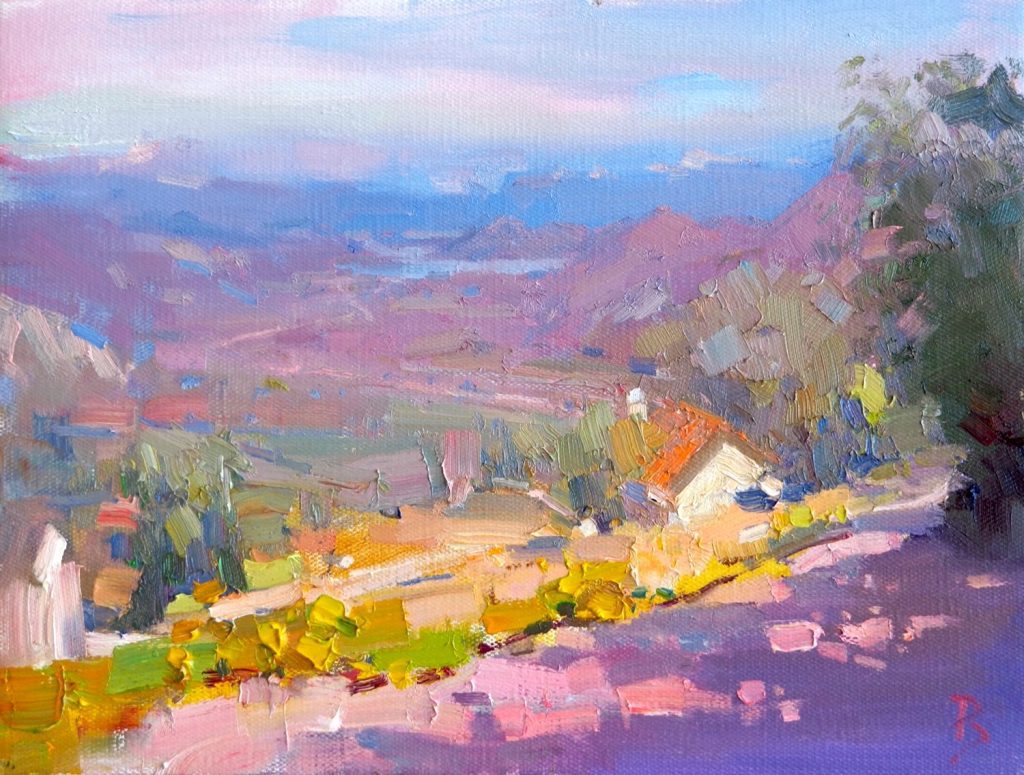
Composition is the key to successful painting. Without a strong composition, you can spend an enormous amount of time on crafting an accurate representation of your subject, but you will never end up with a work of art. It is the composition of a painting that makes it interesting to look at and keeps the viewer’s attention.
The curriculum includes lessons on unequal space division — negative shapes — boundary relationships — rule of threes — viewfinder — cropping — symmetry — rhythm — overlapping forms — focal points — directing lines — transitions — counterpoint, and much more.
Building Block #2 - Color
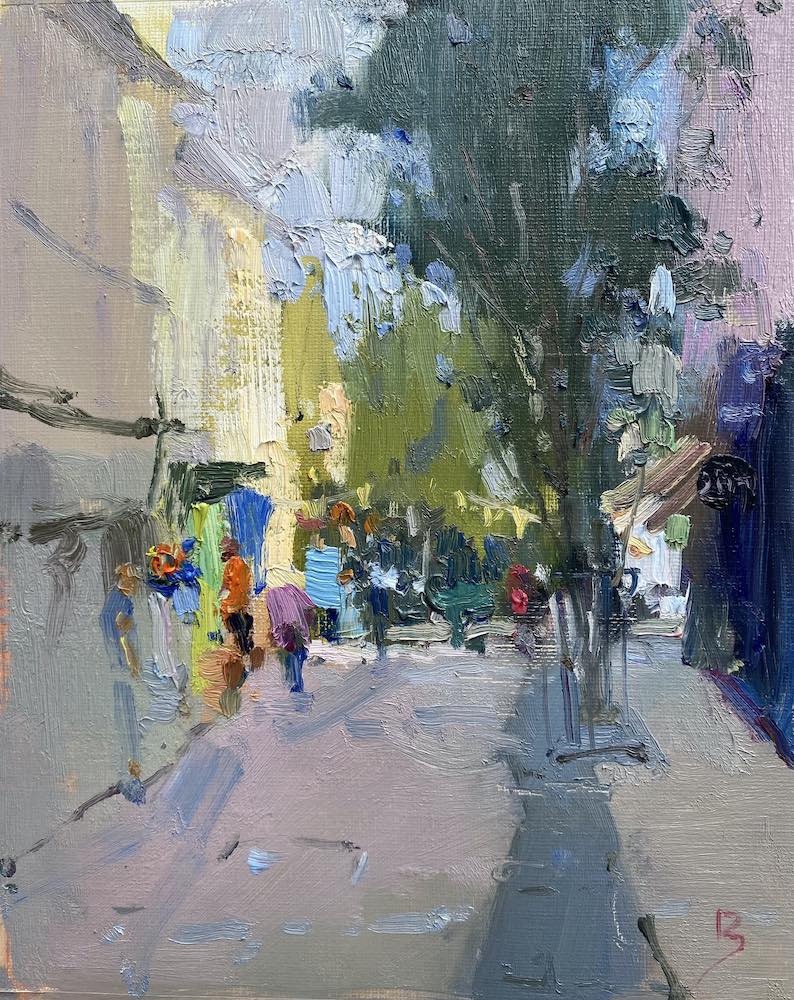
Color is what creates excitement in a painting. The curriculum starts with the basic knowledge you need to know about color, including its attributes, hue, value, and saturation, the key color wheels including the Munsell system, and several color harmony strategies.
Building on this knowledge you will learn more advanced principles used by the master colorists, such as, color vibration, optical mixing, and value compression using constant saturation scales, as well as many more topics on color for advanced painters.
Building Block #3 - Brushwork
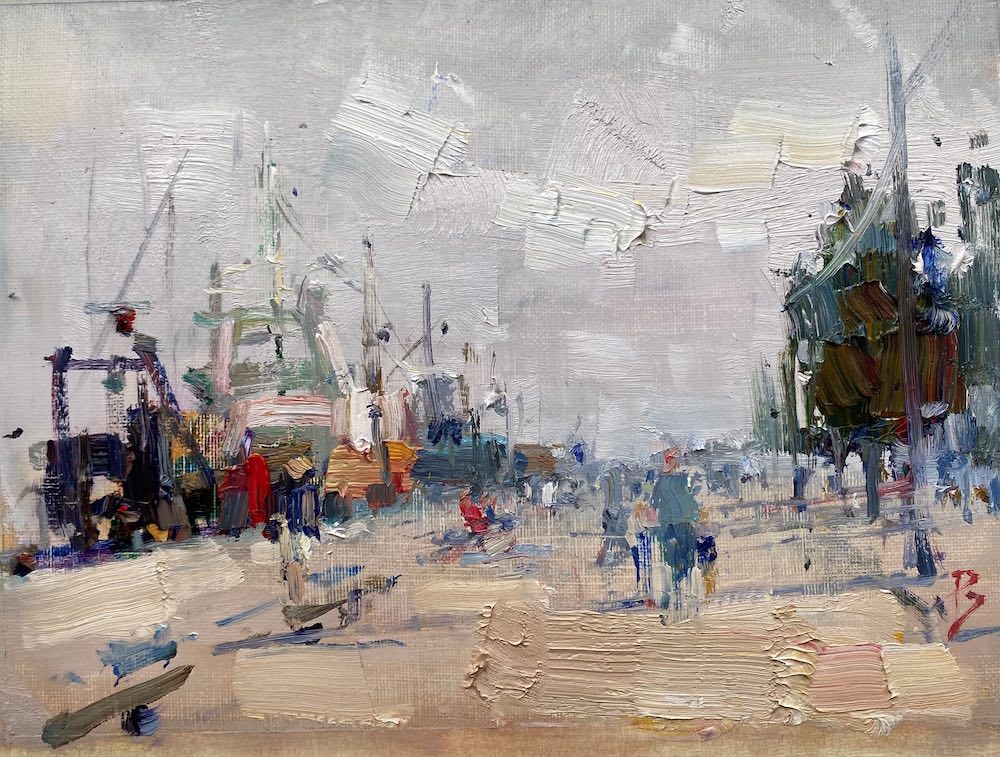
The character and feeling of your brushwork goes a long way to increasing the pleasure and delight of the person viewing your work. How you apply the paint also determines how much carrying power and luminosity your painting will have. Whatever your media, brushwork (or mark making in the case of pastel painting), is what makes a painting a painting and not a photograph.
The curriculum includes many topics on brushwork, such as, thick & thin – impasto – large to small – glazes – feathering – palette knife – carving out – texture – movement – emotional mood – mop/rigger - lost and found edges - wet-in-wet adjacent brushstrokes – multicolored brushstrokes.
Building Block #4 - Drawing
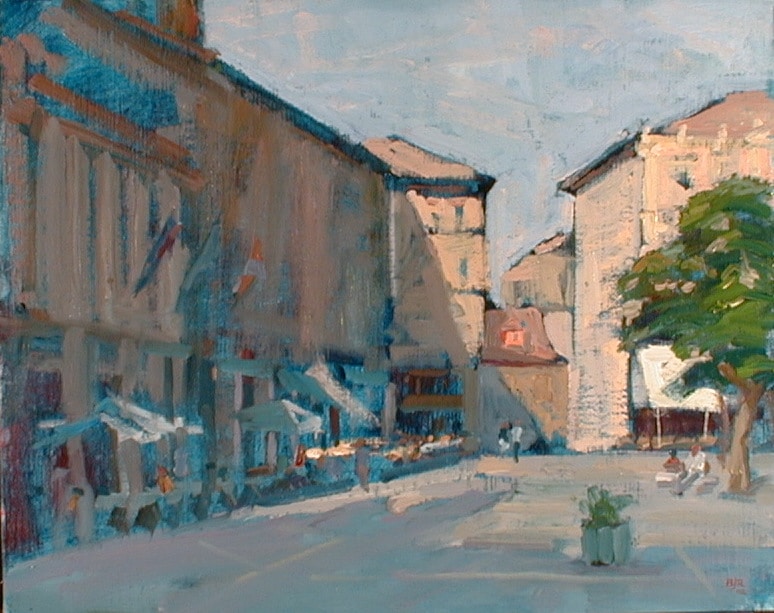
There are many different techniques for learning drawing – gesture, contour, envelopes, scribble line, mass, and so on. In the Apprentice Program you will learn all of these individual techniques, including the single most important technique I only discovered after drawing for 20 years that made my drawings far more accurate.
In addition to these techniques, you will learn about topics, such as, horizon lines – vanishing points – perspective center – drawing ellipses — level & plumb lines – comparative measurement.
Building Block #5 - Form
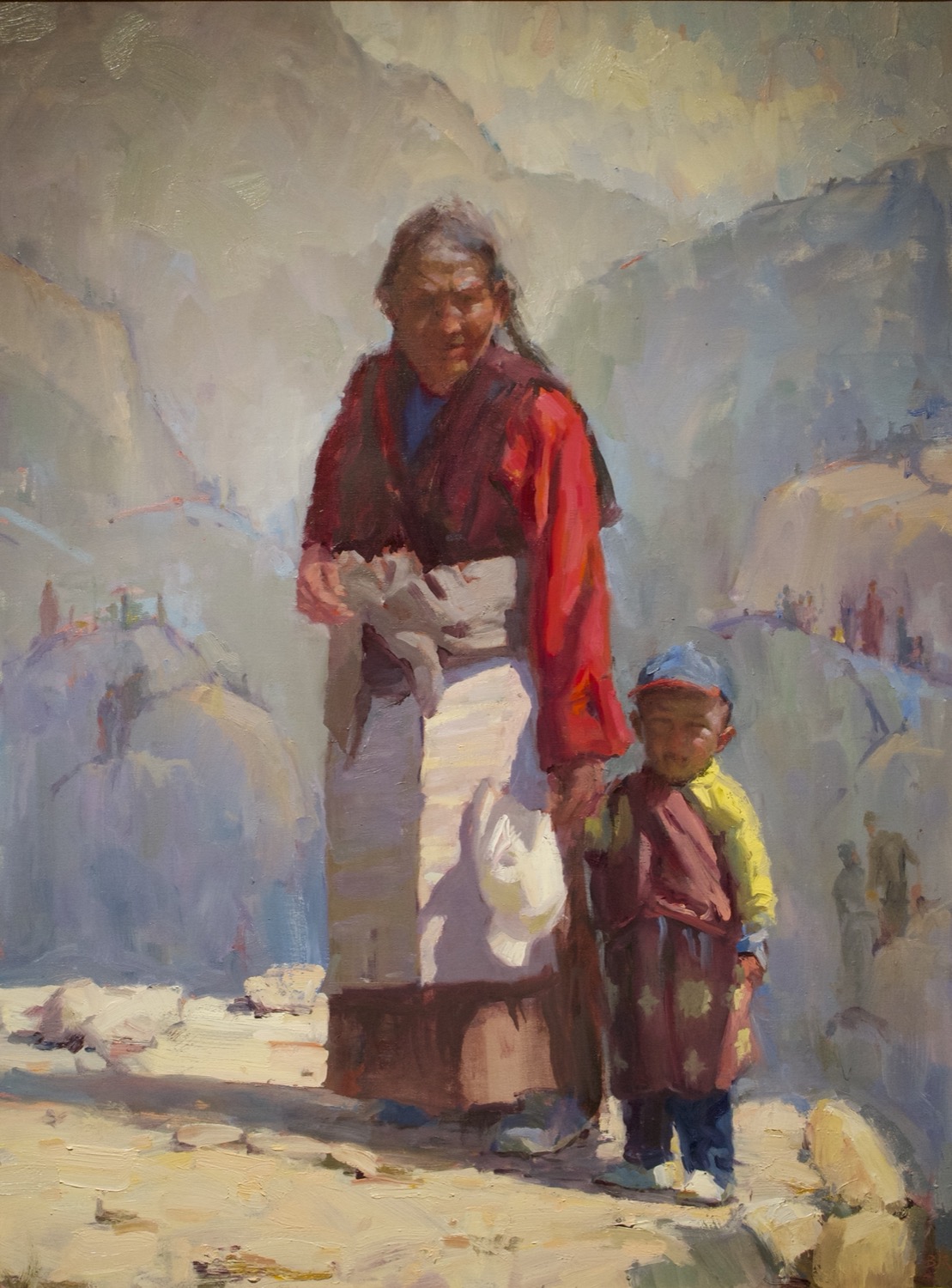
Knowing how to make things look three-dimensional is fundamental to making your painting look real. The Form Building Block includes an important technique called the two-value statement which is used for capturing the basics of form in a few minutes.
In this Building Block you will learn about topics, such as, light & shade – two-value statement – selecting a viewpoint – geometric forms – general to specific – simplifying complex forms — how to paint the form – shadow & cast shadow – light – half tone – center light – reflected light – highlight – dark accents and edge planes.
Building Block #6 - Notan
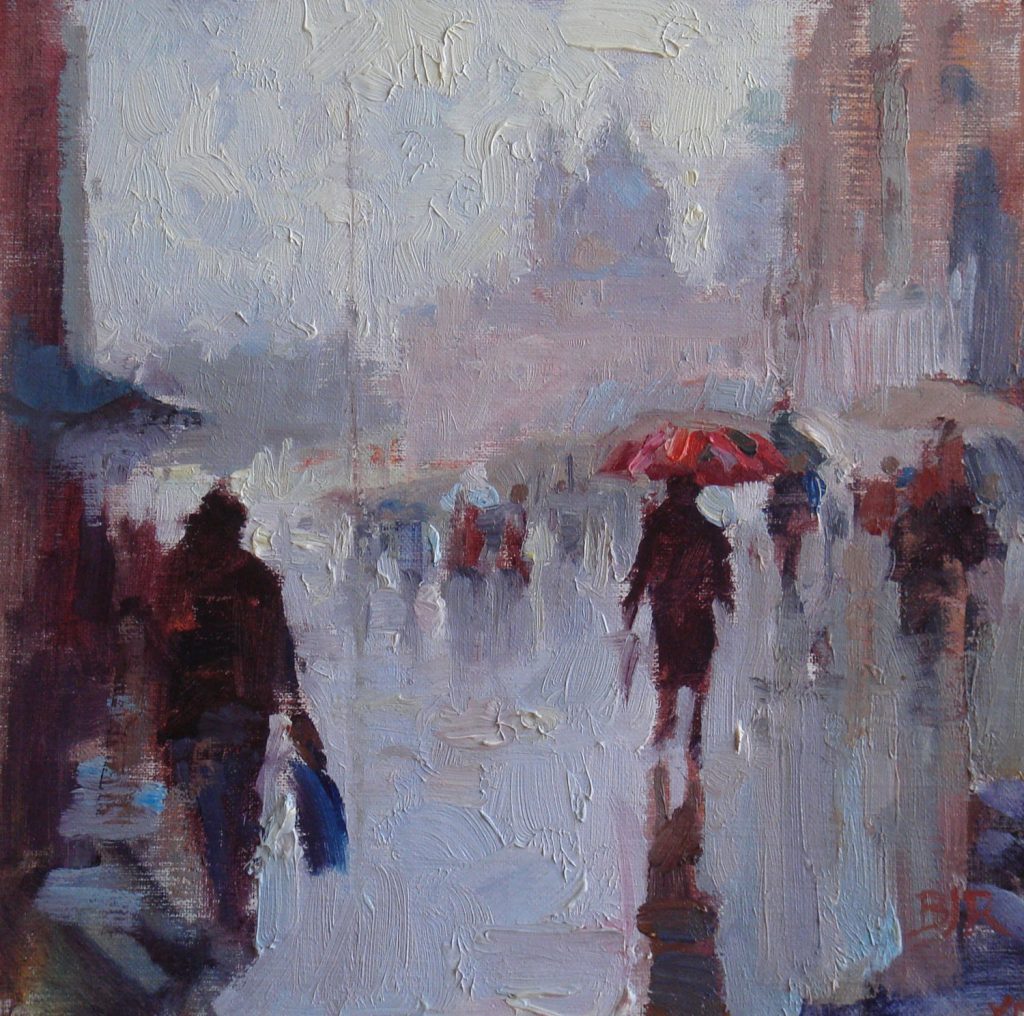
Why does a certain painting win first place in an art competition? The answer lies a lot in its notan structure, a well organized arrangement of dark and light shapes. Of all the parts of a painting that enhance its abstract design, the notan structure is the most important. Just about every successful master painting has a very strong notan structure.
The curriculum includes topics, such as, dominant values – shape distinction – linking lights – linking darks — flattening values – alternating lights & darks – spotting – keys — interesting silhouette – gradation – edge notan.
This Building Block includes material from my own research that you will not find anywhere else.
Building Block #7 - Observation
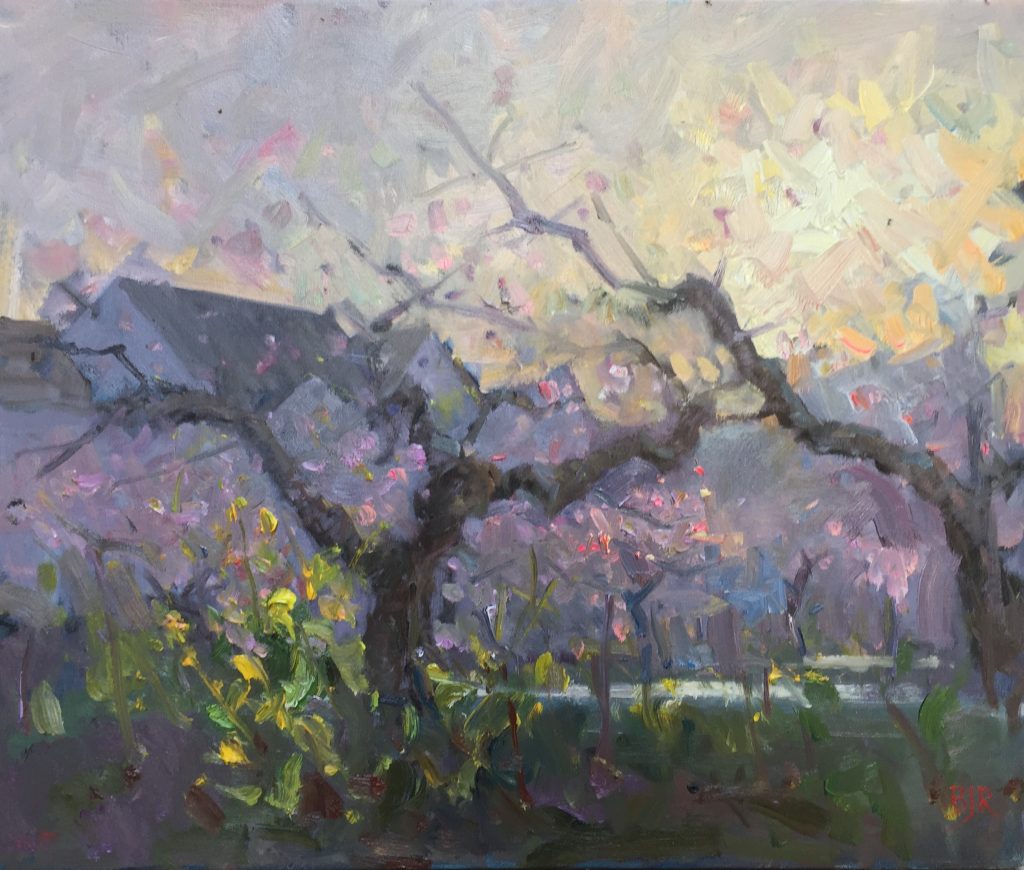
The realism in your painting comes from accurately depicting in paint what you see in front of you. You do not need to learn how to paint trees, skies, rocks, water, and so on. You need to learn to see trees, skies, rocks and water.
When a student says “I can’t seem to mix the right color,” the problem is rarely in the mixing but nearly always in an inability to see the color. The color problems in our paintings are often our left brain taking over and telling us what the color should be as opposed to what we are actually seeing.
The curriculum for observation focuses on acquiring the essential knowledge and skills in three areas, values, color, and atmospheric perspective. You will study about value scale – comparing values – value finder – black mirror – limited value study – reference values — matching colors – color maps – color studies – colored light sources – block studies - diminishing size – overlapping forms – changes in value, saturation , hue.
Building Block #8 - Concept
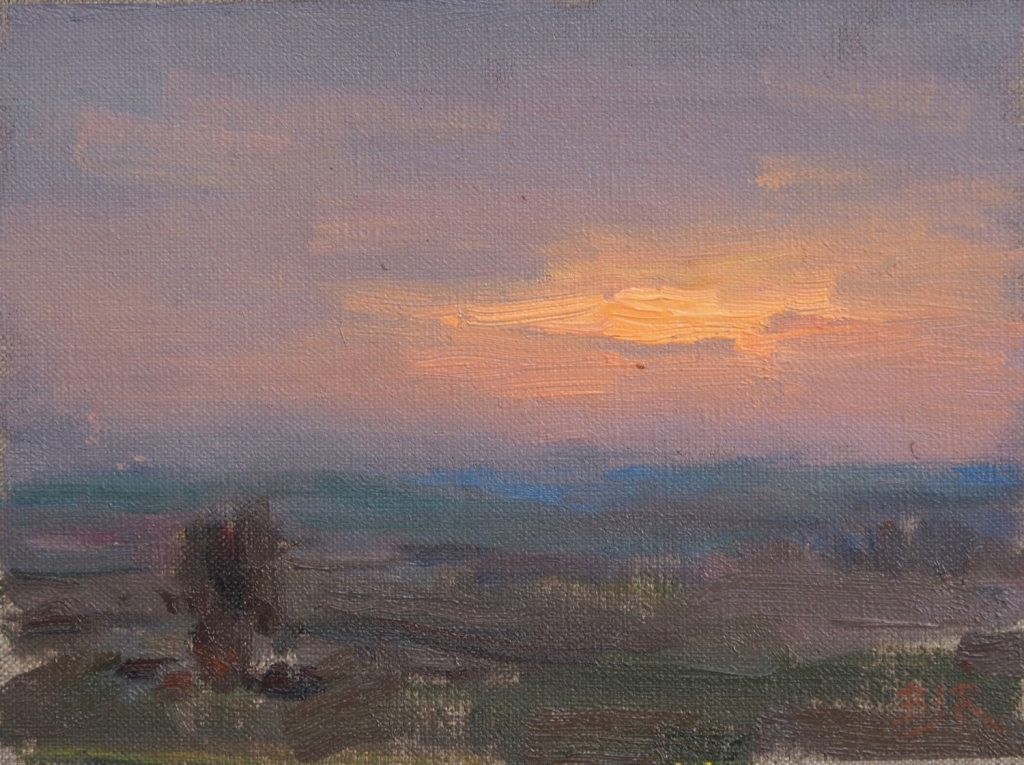
When you learn to become aware of the poetry in a painting you will begin to see paintings in a new light. You will also start to understand why certain master paintings in museums are considered a masterpiece.
It is this element of poetry, in addition to the music of a painting, that distinguishes a master painter. When you master the ideas in the Concept course unit, your paintings will start to communicate much more emotion and feeling, and come to life. They will become much more meaningful.
Even if you are an absolute beginner, I think you need to understand these main ideas right away so that you know how to evaluate paintings when you see them in galleries or on the internet. In this Building Block you will learn concepts, such as, emotional – aesthetic – descriptive – relationship – emphasis – concept simplification – exaggeration.
Building Block #9 - Process And Materials
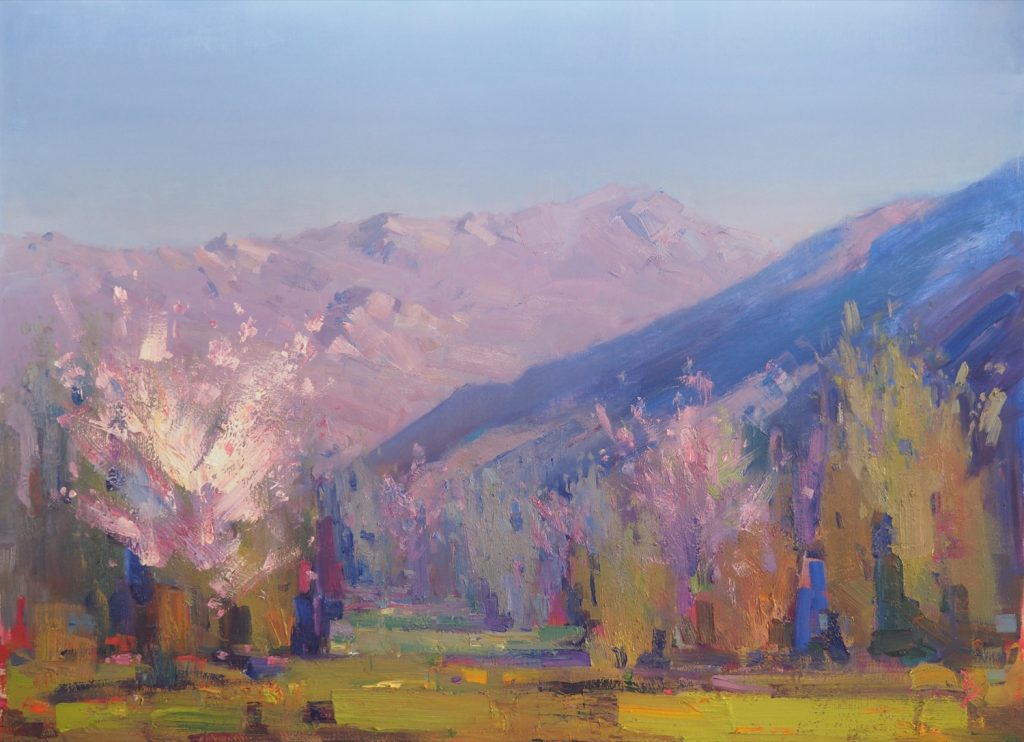
The Process Building Block covers the step-by-step mechanical procedures of creating a painting. I have put these course units into a separate Building Block because, whereas all the other Building Blocks are mostly independent of the medium you are using, this Building Block is specific to oils, acrylics, or watercolors.
The lessons on process include nine step alla prima process – notan painting – oil and acrylic quick color sketch - eight step watercolor process – watercolor quick color sketch - working from photographic reference.
This materials library covers everything about the materials and the equipment needed for painting in detail including the following topics and much more.
Properties and types of pigments – choosing acrylic paints – choosing watercolor paints – tube wringer – solvents – varnishes – reworking paintings – painting supports – stretching canvas – gluing supports to mounting boards – preparing supports – sizes – primers – grounds – cutting panels – old painting supports – drying racks — loose canvas – masking tape – drying paintings quickly – drying boxes – painting support carriers – stretched canvas carrier brackets — brushes — easels — Pochade boxes — packing list – umbrellas – stool – mirrors – clothing – mahl stick – medium cup – trash can – paper towels – carriers.
Art Reference Library
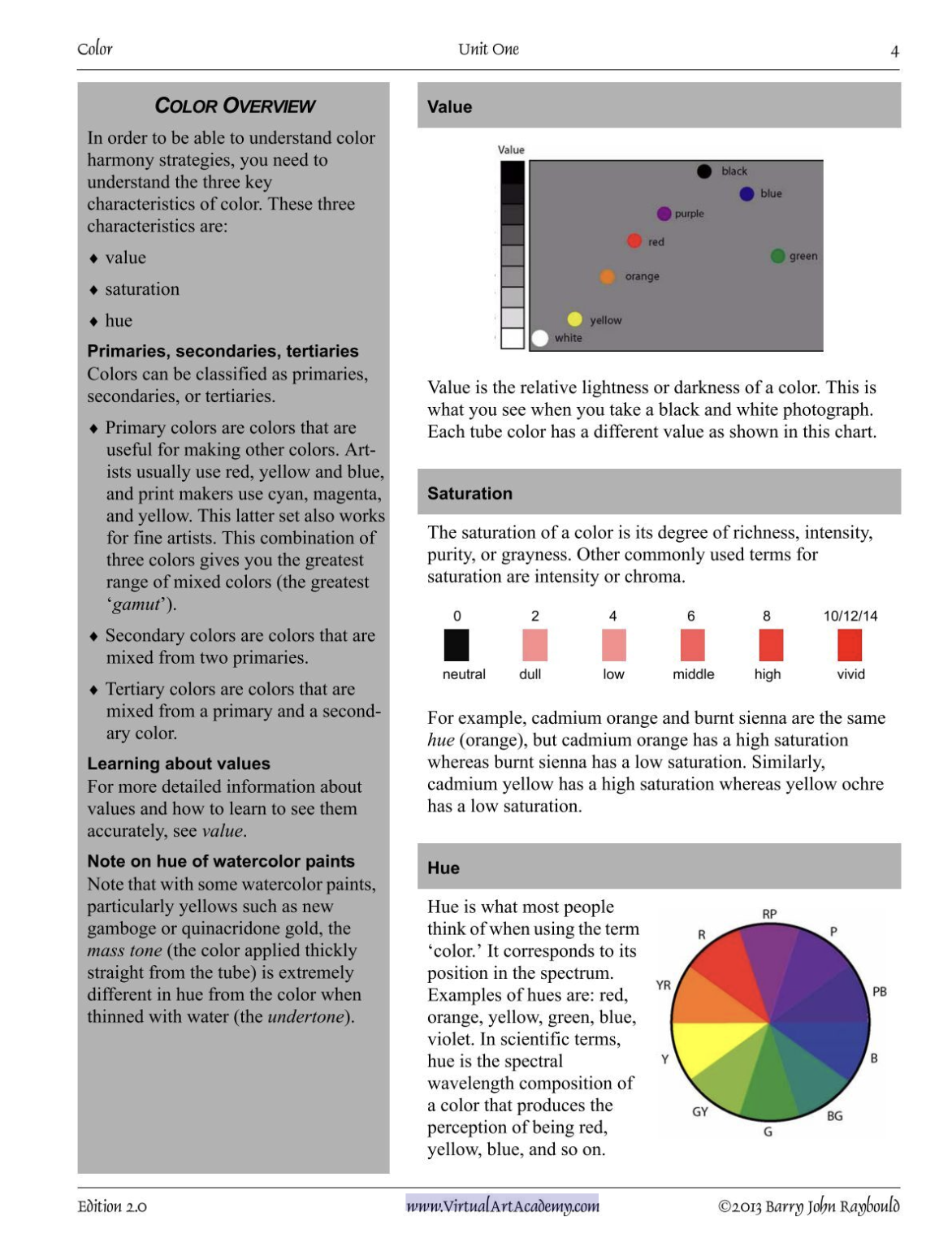
With your online painting classes, you also get to build your own Art Reference Library. Each month of your membership you will get a beautifully formatted eBook like the sample below, to download and keep forever. This Reference Library covers everything you need to know to become a master painter.
Assignments
Anyone who has tried to learn a new language or play a musical instrument, knows that learning consists of acquiring knowledge and a lot of practice. To help you fully master and internalize each painting technique, each lesson has at least one learning assignment.
Each assignment contains instructions, as well as several examples of the work that previous students have submitted.

Access Includes
Four Learning Programs:
- Foundation
- Apprentice
- Graduate
- Post Graduate
Free Monthly eBook
Full Online Campus Access
App for your Phone and Tablet
Recorded Live Lectures
Comprehensive Art Reference Library
Customized Learning Paths
Downloadable Assignment Planner
89 USD Monthly + local taxes
Cancel Subscription Anytime and Owe Nothing
